Explorations in clay · Northern Michigan
Cornelia Hoehle
works in clay.
A long, attentive exploration of form, surface, and weight — vessels and objects shaped one at a time, fired slowly, held to the standard of things made to last. Some of the work sits on the table. Some sits in the hand. All of it is part of an ongoing inquiry into what clay can be asked to do, and what it answers back. Cave Clay is the home for that work.
§ 01 · Forms
Vessels and objects, made one at a time.
Bowls, mugs, tea cups. Each piece is wheel-thrown or pinched, glazed, and fired in the studio. The past work below shows the language Cornelia is working in. If something speaks to you, the next step is a conversation.
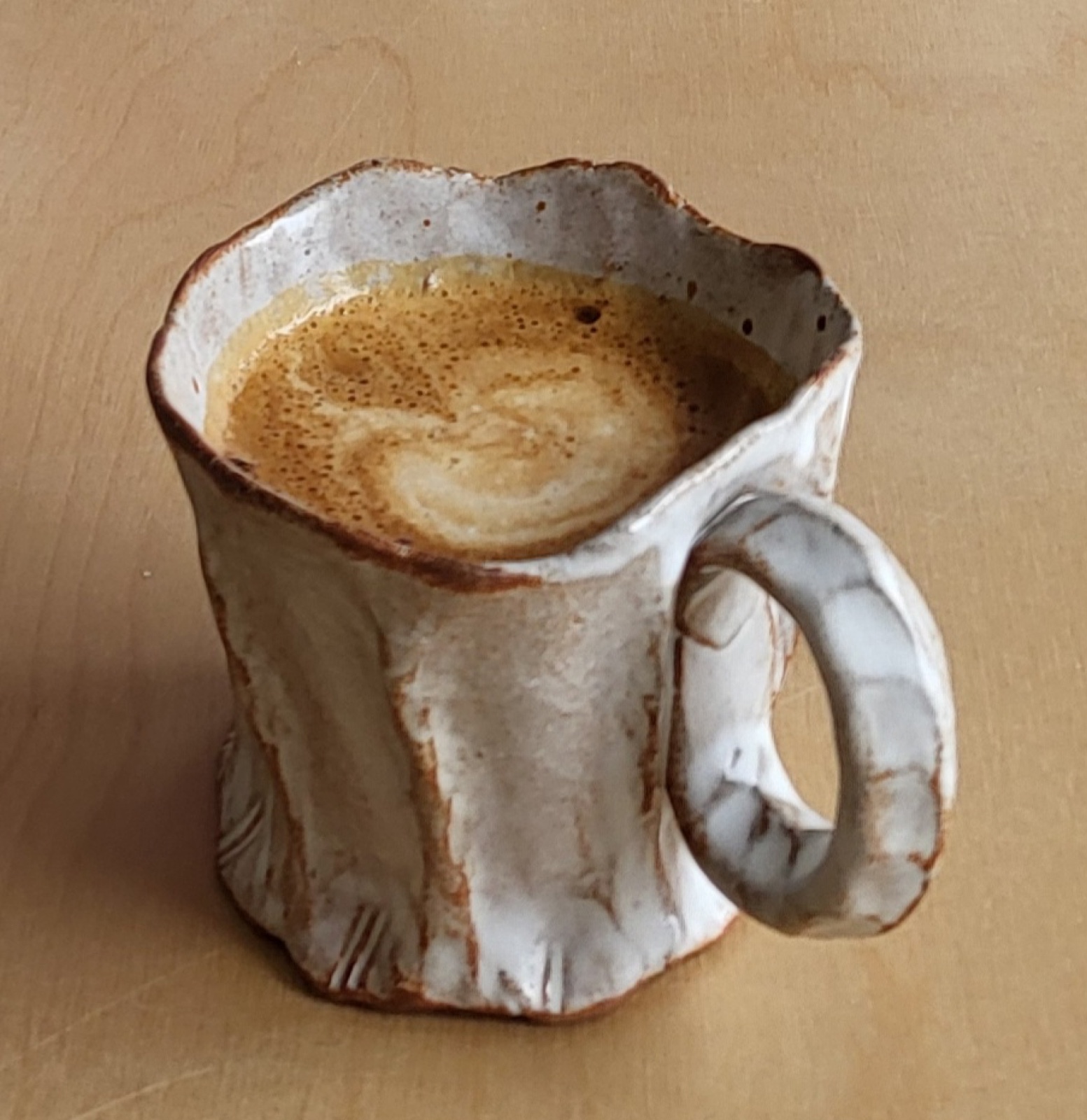
- Pinched coffee mug, white glaze, cone 6Past work · sold
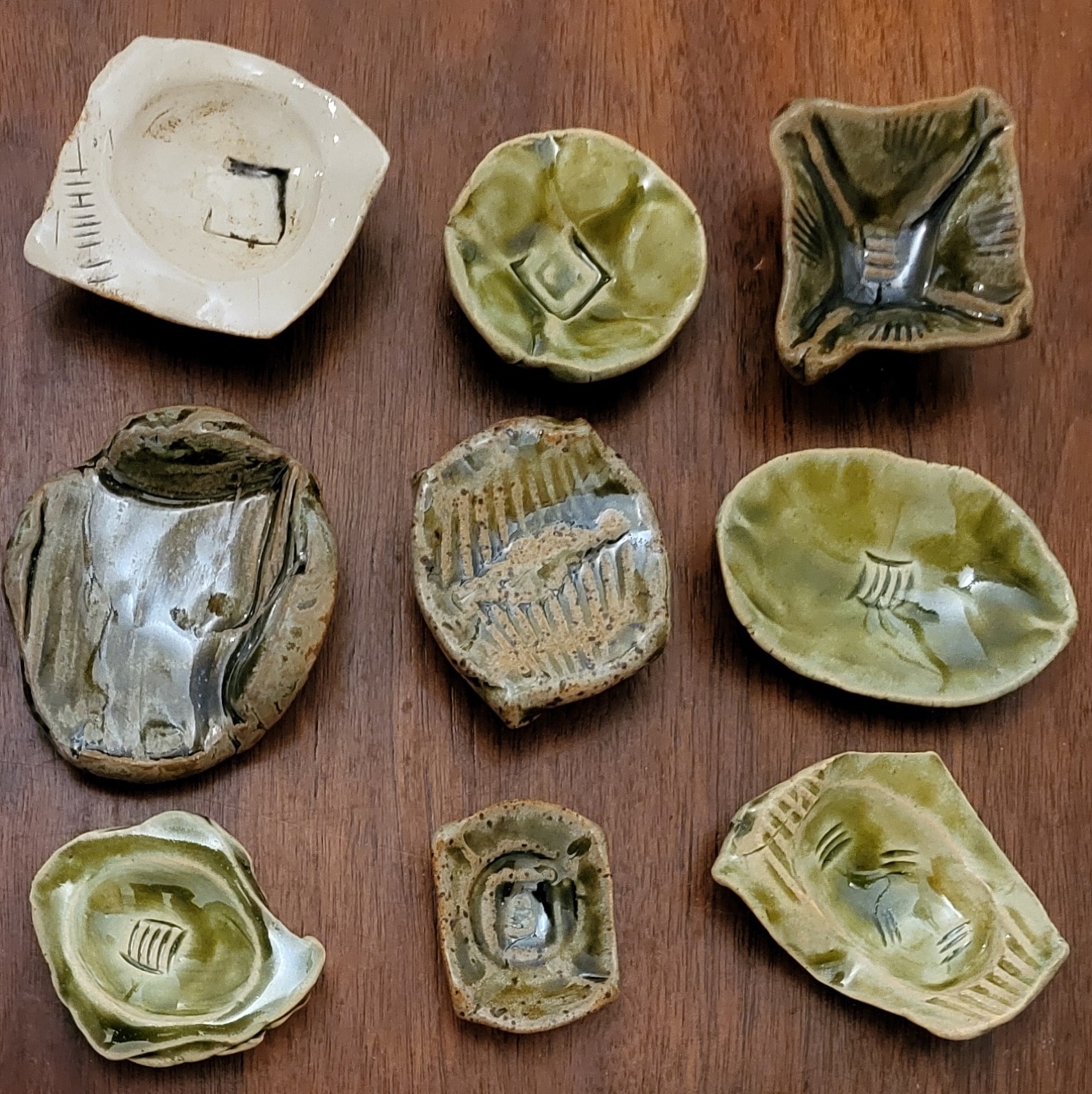
 Bowls with interior medallion, iron-oxide decor, cone 6Past work · sold
 Bowl with iron-oxide decor and chop-mark, cone 6Past work · sold
 Bowl, white glaze with wax-resist decor, cone 6Past work · sold
 Tea cup, celadon-style glaze, cone 6Past work · sold
 Three bowls in three glazesPast work · sold
 Cortado cup with chop-markPast work · sold
§ 02 · Lucky charms
Miniature forms in the netsuke tradition.
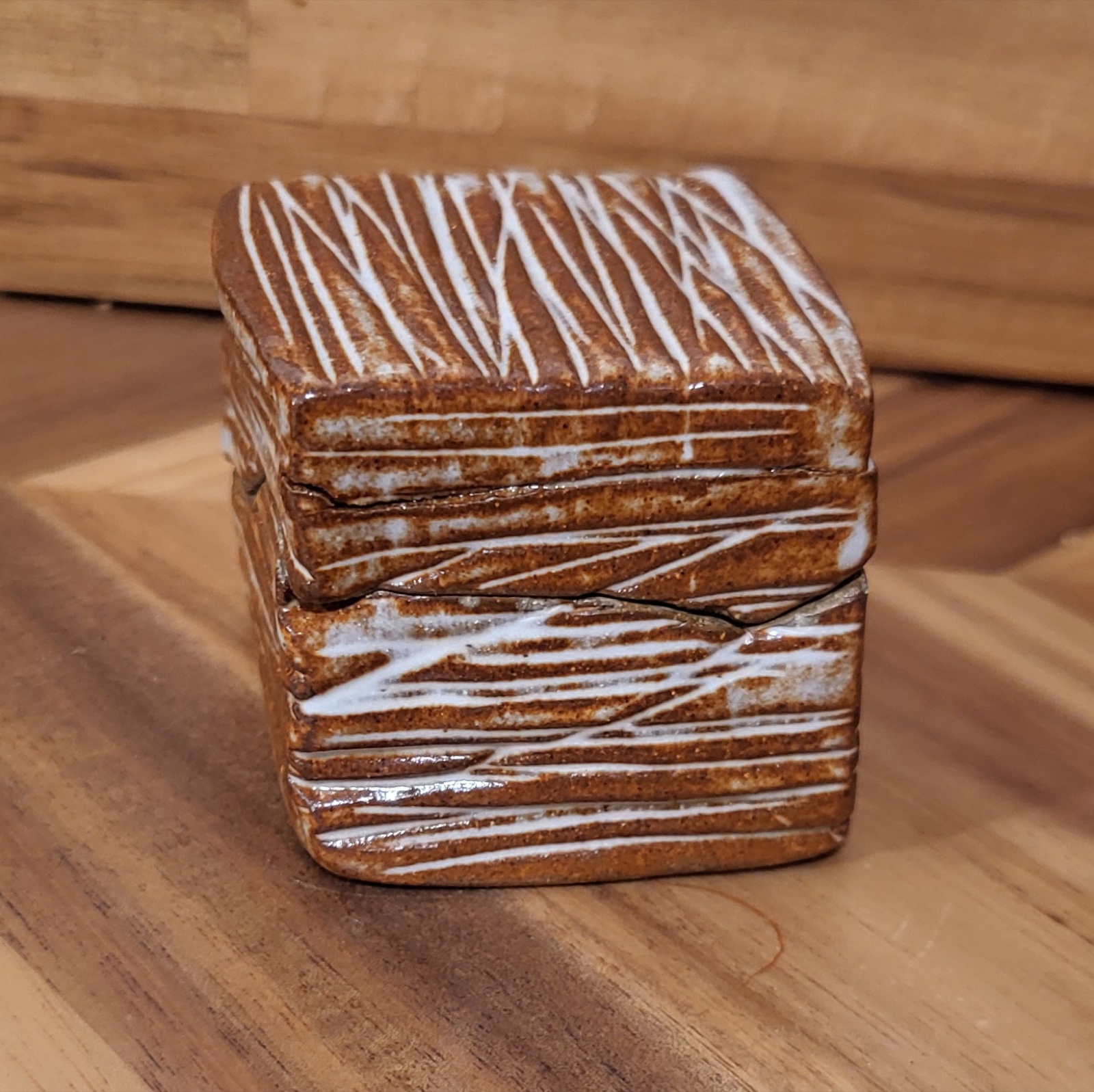
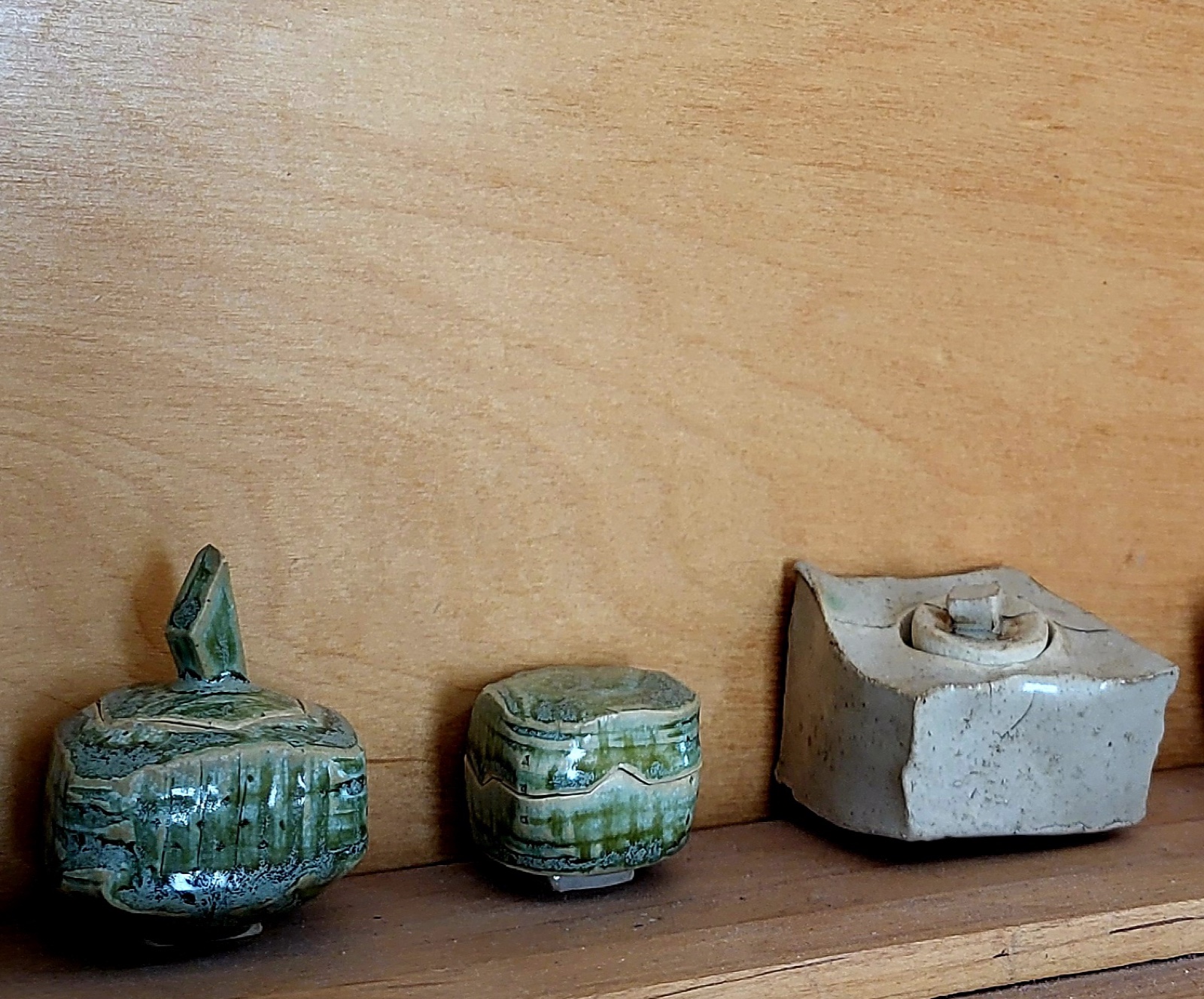
A continuing body of small ceramic objects — most around an inch wide — made in the netsuke tradition. Netsuke are the small carved pieces that originated in Edo-period Japan as toggles for the cords of a kimono sash: held in the pocket, warmed by the hand, looked at closely.
Cornelia’s miniatures are made at the traditional scale — small enough to hold, dense with detail, asking to be turned over. Bone, ivory, and wood have been the historical materials; her work is in porcelain and stoneware, fired in the studio.
She calls them lucky charms.
§ 03 · Studio
A home studio in Northern Michigan, returning to full operation.
Cornelia is rebuilding her home ceramics studio at her farm. The studio will be operational within the week and is expected to be fully functional within about a month. New work — wheel time, glaze tests, the first runs of a new firing schedule — will surface here as it’s made.
In the meantime, the door is open for conversations. Commissions are being accepted and queued. Cornelia prefers to talk before agreeing to a piece, so she can give an honest answer on what the work asks for and when she can finish it.
Trained at the Harrow School of Art and Technology, United Kingdom.
§ 04 · Commissions
What you’re commissioning is the artist.
Cornelia accepts commissions at her own discretion and works in her own voice. She listens to who you are and what drew you to the work, then she goes to the wheel and makes what she makes. The form, the surface, the size, the glaze — those are her decisions.
Payment is in full before work begins. There are no drafts and no edits, and the work is final once it’s made. If that sounds right, the next step is a short call or an email.
Phone
+1 (231) 675-1936